
Recorded surgical video provides a detailed record of how a procedure was performed. It can be used for case review, education, research and discussion between surgeons, but extracting useful information from video often requires clinicians to locate relevant sections and review cases individually.
Artificial intelligence is creating new ways to organise and analyse this information. Surgical video analytics uses computational methods to convert recorded procedures into structured data that can be reviewed across individual cases or over time.
For supported procedures, AI can identify predefined surgical phases or steps and divide a completed procedure into a structured timeline. This allows clinicians to move directly to particular parts of an operation and examine measures such as phase duration, variation between cases and changes across multiple procedures.
Rather than replacing surgical judgement or traditional approaches to learning, these data provide another way to review how procedures are performed.
What Is Surgical Video Analytics?
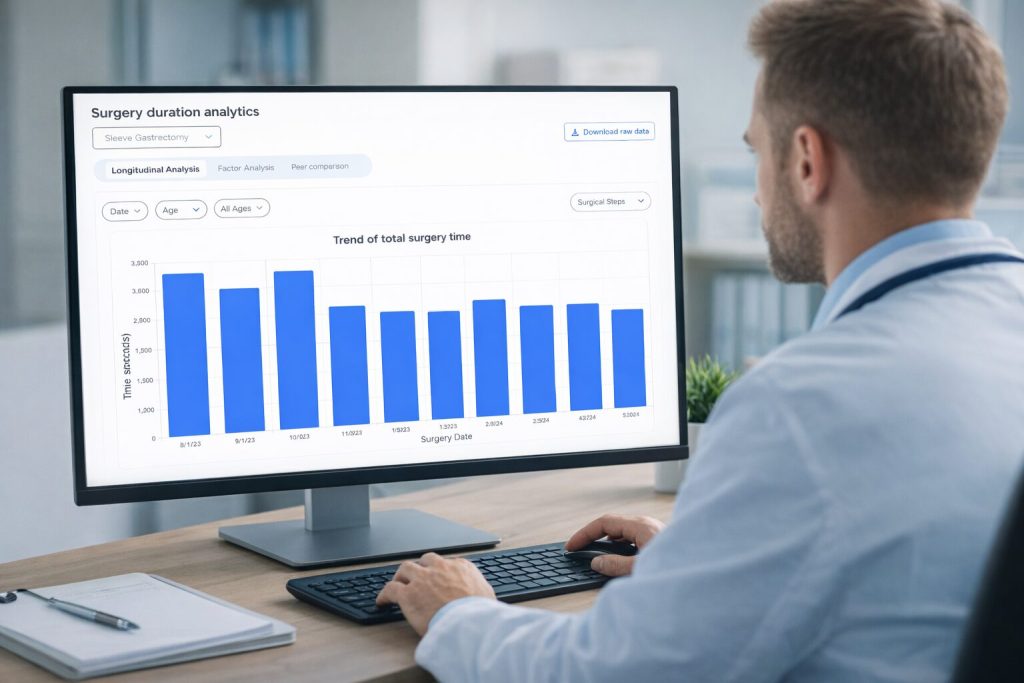
Surgical video analytics refers to the use of digital technologies to extract and organise information from recorded surgical procedures.
A surgical video contains a continuous visual record of an operation. Reviewing that recording manually may require a clinician to locate particular stages of the procedure and record information such as when each stage begins and ends.
AI-based video analysis can automate parts of this process.
For procedures supported by a particular analytical model, AI can identify predefined phases or steps and organise them along a timeline. Timing information can then be generated for the overall procedure as well as individual phases.
This converts a video from a continuous recording into structured information that can be searched, compared and reviewed more systematically.
How AI Structures Surgical Video
AI models used in surgical video analysis are trained to recognise visual patterns associated with defined parts of a surgical procedure.
Once a completed surgical video is uploaded, the system can analyse the recording and identify the phases or key steps it has been designed to recognise.
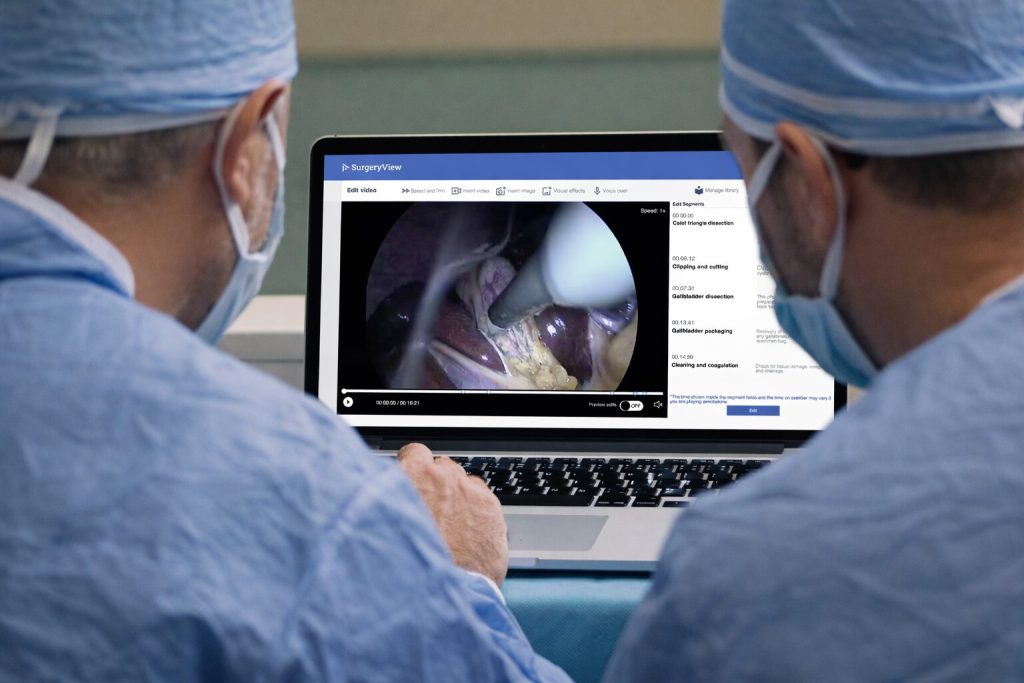
The result is a segmented timeline of the procedure.
Instead of manually reviewing the recording from beginning to end, a surgeon or educator can move directly to a particular phase or step. The associated timing data can also be used to compare the same part of a procedure across different cases.
The capabilities of surgical video analytics depend on the procedure and the analytical model being used. A model developed for one procedure should not be assumed to identify the phases of another procedure in the same way.
What Can Phase-Level Data Show?
Overall procedure duration provides only one measure of an operation.
Two procedures may have different total operating times, but that difference may not be distributed evenly throughout the case. One particular phase may account for much of the variation.
Phase-level analysis makes these differences more visible.
For example, surgeons can examine:
- The duration of the overall procedure
- The time spent within individual phases or steps
- Variation in phase duration between cases
- Trends in procedural and phase timing across multiple cases
- Differences between their own cases and selected comparison groups
This provides a more detailed view than total procedure time alone.
Importantly, timing is a measurement rather than a judgement of surgical quality. A longer phase may reflect patient anatomy, procedural complexity, previous surgery or other clinical circumstances. The data therefore need to be considered in the context of the individual procedure.
Learning From Patterns Across Multiple Cases
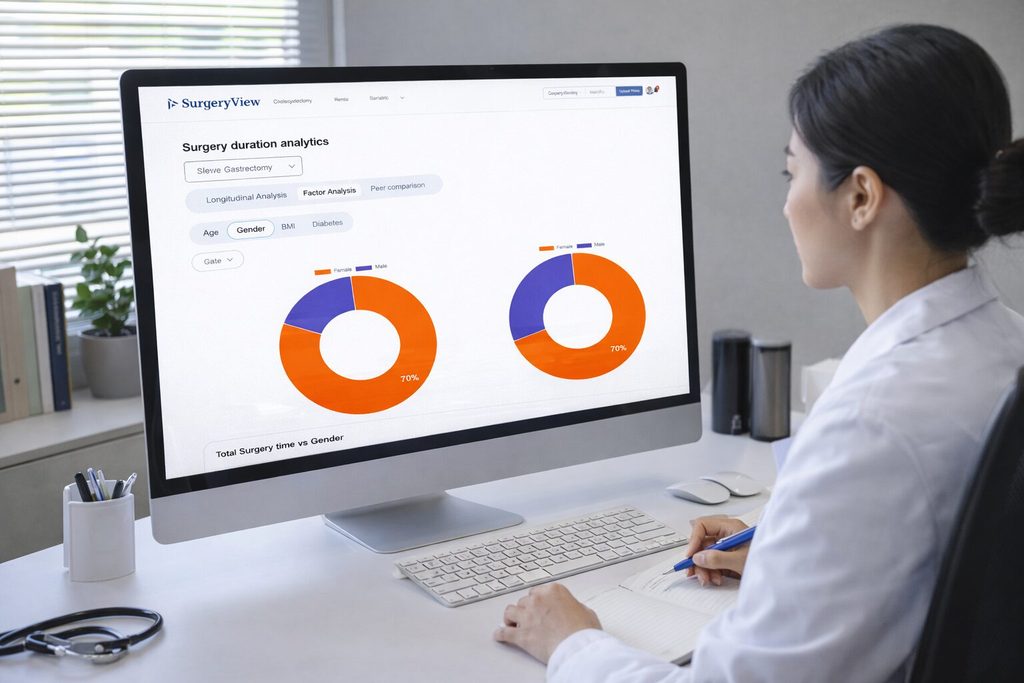
Analysing multiple procedures allows surgeons to move beyond reviewing a single case.
Longitudinal analysis can show how overall procedure times or individual phases vary across a series of cases. If a recurring difference is concentrated within a particular phase, the surgeon can return to the corresponding video and examine that part of the procedure more closely.
This makes the review more specific.
Rather than simply asking whether an operation was faster or slower, the surgeon can examine questions such as:
- Which phase accounted for most of the difference?
- Is the same pattern present across several cases?
- How variable is the timing of a particular phase?
- Has the pattern changed over time?
The answers do not establish why the differences occurred, but they can identify areas for more focused review and discussion.
Comparing Cases and Peer Benchmarking
Another application of surgical video analytics is comparison across cases or groups of surgeons.
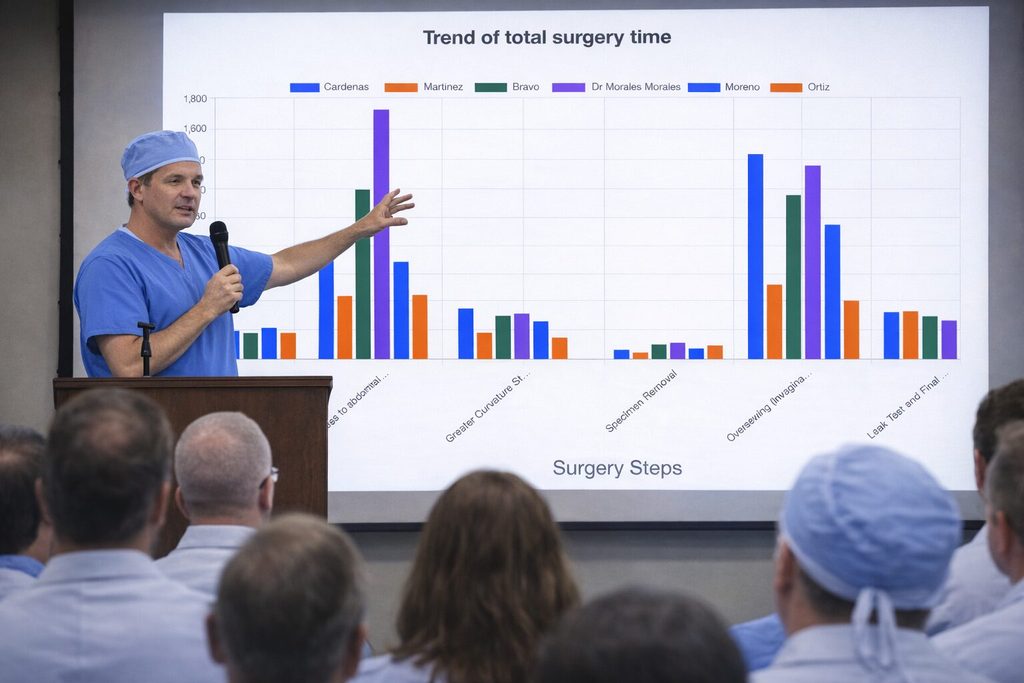
Benchmarking can provide a reference point for examining procedural and phase-level timing. Instead of comparing only total procedure duration, surgeons can look at where differences occur within the procedure.
For example, a surgeon’s overall procedure time may be similar to a comparison group while the distribution of time between individual phases differs.
This type of comparison can help direct attention to specific parts of an operation for further review.
Benchmarks should be interpreted carefully. Differences in case mix, patient characteristics and procedural complexity may influence timing, and a difference from a benchmark does not by itself establish that one technique or approach is preferable.
Surgical Video Analytics in Education and Continuous Learning
Surgical learning has traditionally involved observation, supervised experience, case discussion, mentorship and feedback from other clinicians.
Recorded surgical video adds another resource by allowing completed procedures to be revisited after the operation.
AI-based video analytics can make this review more structured by directing surgeons and educators to specific phases and providing corresponding timing information.
For trainees, this can support discussion around particular parts of a procedure rather than relying only on overall impressions of a case.
For more experienced surgeons, analysis across multiple procedures can provide another way to examine variation in their own practice and compare selected measures over time or with peers.
Research has also examined automated surgical video analysis and AI-based performance assessment as tools for surgical education. These technologies are still developing, and quantitative measures should be used alongside clinical experience and expert assessment rather than as a replacement for them.
SurgeryView: From Surgical Video to Structured Data
SurgeryView.ai, developed by Genesis MedTech, is a digital surgery intelligence platform designed for post-procedure surgical video review.
Users upload completed surgical videos to the platform. For supported procedures, SurgeryView uses AI to identify surgical phases and key steps and converts the recording into a structured timeline.
Available analytics vary according to the procedure and can include longitudinal analysis, comparison between cases, selected factor analysis and peer benchmarking.
By combining the segmented video with phase-level timing data, surgeons can move from an overall measure such as total procedure duration to examining where differences occur within the operation.
For example, when comparing cases, the analytics may show that variation is concentrated within a particular phase. The surgeon can then return directly to that section of the video for closer review.
SurgeryView also allows surgical videos to be organised in a central library and revisited for purposes such as teaching, case review and research.
Analytics are available for selected supported procedures, with the level of analytical functionality varying by procedure.
What Surgical Video Analytics Can and Cannot Show
Surgical video analytics can measure and organise selected aspects of a recorded procedure, but the resulting data require clinical interpretation.
Analytics Are Procedure-Specific
AI models recognise the phases or steps they have been developed to analyse. The availability and level of analytics therefore vary between procedures.
Timing Does Not Explain Cause
Analytics may show that one phase takes longer in one case than another, but the measurement alone does not explain why.
Patient anatomy, disease characteristics, previous surgery, procedural complexity and other factors may contribute to the difference.
A Difference Is Not Necessarily a Performance Problem
A longer procedural phase should not automatically be interpreted as poorer surgical performance.
The value of the data lies in identifying patterns or differences that can then be examined in their clinical context.
Analytics Complement Clinical Review
AI can organise video and generate quantitative measures, but clinicians are still needed to interpret what those measures mean for the individual case.
Surgical video analytics is therefore best viewed as an additional resource for structured review and learning.
Conclusion
Surgical video analytics provides a way to turn recorded surgical procedures into structured information that can be reviewed across individual cases and over time.
By identifying predefined procedural phases and steps, AI can make it easier to navigate surgical video and examine where differences in procedural timing occur.
Phase-level analysis, longitudinal trends and benchmarking can provide more specific information than overall procedure duration alone, helping surgeons and educators identify areas for closer review and discussion.
These measurements do not determine surgical quality by themselves. Their value lies in providing structured information that clinicians can interpret alongside the patient, procedure and wider clinical context.
As AI-based video analysis continues to develop, it may provide an increasingly useful additional tool for surgical education, case review and continuous professional learning.