
Minimally invasive surgery is used across a range of surgical specialties, including general surgery, urology, gynecology and thoracic surgery. Instead of accessing the surgical site through a large incision, surgeons typically operate through smaller incisions using a camera and specialized instruments.
Robotic-assisted surgery is one approach to performing minimally invasive procedures. Despite the term “robotic surgery,” the robotic system does not operate independently. The surgeon controls the system and remains responsible for clinical decision-making and the procedure itself.
Robotic-assisted systems can provide different ways of visualizing the surgical field and controlling surgical instruments. Understanding how these systems work — and what they do and do not do — is important when considering their role in modern surgery.
What Is Robotic-Assisted Surgery?
Robotic-assisted surgical systems are a type of computer-assisted surgical technology.
During a robotic-assisted procedure, the surgeon controls surgical instruments through a console or other control interface. The surgeon’s movements are translated by the system into movements of instruments positioned at the surgical site.
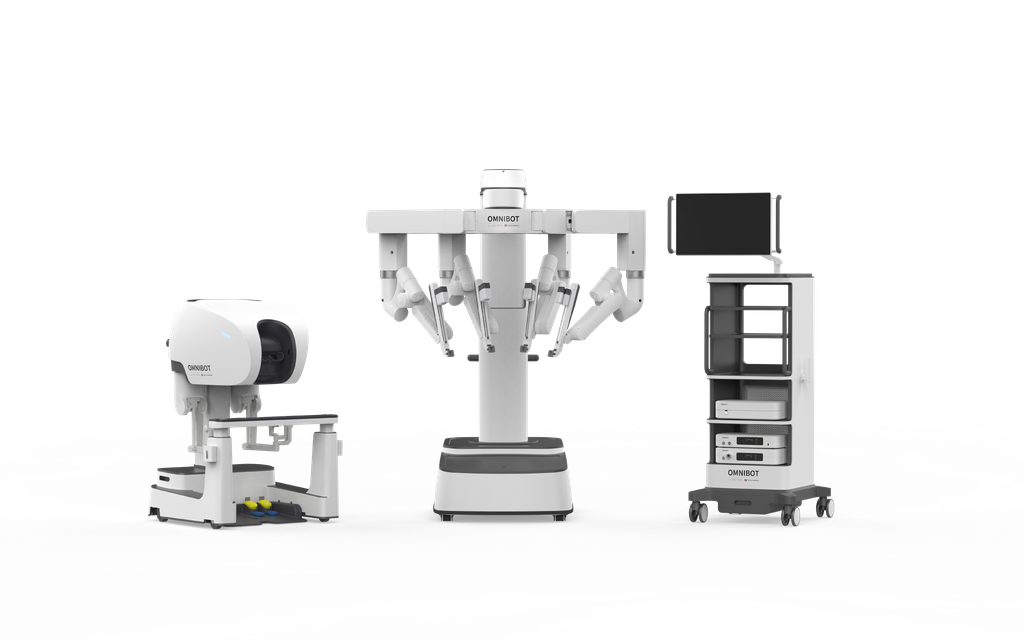
The exact configuration varies between systems, but a robotic-assisted surgical system may include:
- a surgeon console or control interface;
- robotic arms that hold surgical instruments;
- a camera or endoscope for visualization;
- specialized surgical instruments; and
- supporting hardware and software.
The system assists with the physical execution of the surgeon’s movements. It does not independently decide where to operate, make clinical decisions or perform the procedure without surgeon control.
How Does Robotic-Assisted Surgery Work?
In conventional laparoscopic surgery, the surgeon usually stands beside the patient and directly manipulates long instruments inserted through access ports.
With many robotic-assisted systems, the surgeon instead operates from a console or control interface. Movements made by the surgeon are translated into corresponding movements of the instruments inside the patient.
A camera provides visualization of the surgical field, while robotic arms position and control the surgical instruments according to the surgeon’s input.
Different systems have different designs and capabilities. Depending on the platform, these may include three-dimensional visualization, articulated instruments, tremor filtration or other forms of movement control.
These are technical characteristics of the surgical system. Their relevance depends on factors such as the procedure being performed, patient anatomy, surgeon experience and the capabilities of the individual system.
What Technical Features Can Robotic Surgical Systems Provide?
Robotic-assisted systems have been developed with features intended to support surgeons when operating through minimally invasive access points.
The capabilities available vary between platforms.
Three-Dimensional Visualization
Visualization is central to minimally invasive surgery because the surgeon views the operative field through an endoscopic camera rather than through the direct exposure available in open surgery.
Some robotic systems provide stereoscopic three-dimensional imaging. This provides depth information that can assist the surgeon in assessing anatomical relationships and instrument position within the surgical field.
Image resolution, field of view, imaging modes and other visualization capabilities differ between systems.
Three-dimensional visualization is a technical feature and should not by itself be interpreted as evidence of improved clinical outcomes. The clinical relevance of different visualization technologies depends on the procedure and other patient, surgeon and system-related factors.
Articulated Surgical Instruments
Many robotic-assisted systems use articulated or wristed instruments that provide movement at the instrument tip.
This differs from conventional laparoscopic instruments, which generally have a more limited range of movement at their distal end.
Depending on the design of the system and instrument, articulation can provide additional options for positioning and manipulating instruments while operating through fixed access points.
The degree of articulation and range of motion vary between robotic platforms.
Tremor Filtration and Movement Control
Small involuntary hand movements can occur during manual instrument manipulation.
Some robotic-assisted systems incorporate tremor filtration, which is designed to reduce the transmission of these small movements from the surgeon’s controls to the surgical instrument.
Systems may also incorporate movement scaling or other forms of software-based motion control. The specific functions available vary between platforms.
These features affect how surgeon input is translated into instrument movement. They do not replace the surgeon’s clinical judgment or technical skill.
Does Robotic-Assisted Surgery Mean Better Surgical Outcomes?
Not necessarily.
Robotic assistance describes how a surgical procedure is performed rather than determining the outcome of the procedure.
The relative benefits, risks and limitations of robotic-assisted, conventional laparoscopic and open approaches vary according to the operation being performed and the individual patient’s circumstances.
Factors that may influence surgical outcomes include:
- the type and complexity of the procedure;
- the patient’s condition and anatomy;
- surgeon experience;
- the experience of the wider surgical team;
- the technology and instruments being used;
- appropriate patient selection; and
- perioperative care.
For this reason, a robotic approach should not be assumed to be preferable for every patient or every procedure.
The choice of surgical approach is a clinical decision that takes into account the patient, the procedure, available treatment options and the experience of the surgical team.
Where Is Robotic-Assisted Surgery Used?
Robotic-assisted surgery is used across several surgical specialties.
Depending on the individual system, regulatory authorization and local clinical practice, robotic-assisted procedures may be performed in areas including:
- urology;
- gynecology;
- general surgery;
- colorectal surgery;
- thoracic surgery; and
- selected cardiac procedures.
However, not every robotic system is designed or authorized for every type of procedure.
Regulatory indications, available instruments, surgeon training and institutional requirements differ between systems and markets. The suitability of robotic-assisted surgery for an individual patient therefore depends on the specific clinical circumstances and the technology available.
Why Training Matters in Robotic-Assisted Surgery
Using a robotic surgical system requires familiarity with the specific platform and its workflow.
Surgeons need to understand the operation of the system, including its instruments, controls, visualization system, operating-room setup and procedures for responding to technical issues.
The wider surgical team may also require platform-specific training because robotic-assisted procedures involve coordination between the surgeon, bedside assistants, nursing staff and other operating-room personnel.
Guidance on the introduction of new surgical technologies emphasizes device-specific training, hands-on experience and appropriate institutional processes before new technologies are incorporated into clinical practice.
Training on a robotic platform complements rather than replaces the surgeon’s underlying clinical knowledge, procedural experience and institutional requirements for credentialing and clinical privileges.
How Is OMNIBOT Designed?
OMNIBOT is part of Genesis MedTech’s surgical robotics portfolio. OMNIBOT is a surgeon-controlled robotic-assisted surgical system for minimally invasive surgery.
The multi-port system incorporates four robotic arms, with each arm providing seven degrees of freedom. Its technical features also include three-dimensional high-definition visualization and tremor filtration.
These features are designed to support visualization and instrument control during robotic-assisted procedures.
As with other surgeon-controlled robotic surgical systems, OMNIBOT does not independently perform surgery. The surgeon remains in control of instrument movement and responsible for clinical decision-making and procedural execution.
OMNIBOT is subject to local regulatory approvals, and its availability and authorized uses vary between markets. Read More
Supporting Training in Robotic-Assisted Surgery
Training is an important part of introducing new surgical technologies into clinical practice.
At the Genesis Innovation Centre, healthcare professionals can participate in educational programmes and hands-on training with medical technologies in controlled training environments.
Such programmes provide opportunities for healthcare professionals to become familiar with the operation and workflow of a surgical system. They do not replace the clinical training, competency assessment or credentialing requirements established by individual healthcare institutions and relevant professional or regulatory bodies.
From Robotic-Assisted Surgery to Telesurgery
In conventional robotic-assisted surgery, the surgeon controls the surgical system within the established surgical environment.
Telesurgery introduces an additional consideration: geographical separation between the surgeon and the surgical system. This makes factors such as network connectivity, latency, system reliability and communication infrastructure relevant to remote surgical control.
These considerations are discussed separately in How Connectivity Supports Telesurgery. Read More
Understanding the Role of Robotic-Assisted Surgery
Robotic-assisted surgery is a form of computer-assisted surgery in which the surgeon remains in control of the procedure while operating instruments through a robotic system.
Features such as three-dimensional visualization, articulated instruments and tremor filtration can affect how the surgeon views the operative field and controls instruments. Their role should, however, be considered alongside the type of procedure, the patient’s clinical circumstances, surgeon experience, training and the wider surgical environment.
As robotic systems continue to be incorporated into surgical practice, understanding both their capabilities and their limitations remains an important part of responsible adoption.
References
- US Food and Drug Administration (FDA). Computer-Assisted Surgical Systems.
- Society of American Gastrointestinal and Endoscopic Surgeons (SAGES). Guidelines for the Introduction of New Technology and Techniques.
This article is intended for general educational purposes and does not replace individual medical advice, diagnosis or treatment from a qualified healthcare professional.