
Energy-based devices are used in surgery for functions including coagulation, vessel sealing, tissue dissection and tissue division. They form one part of surgical hemostasis alongside mechanical approaches such as sutures, clips and staples, as well as topical or pharmacological agents. The appropriate approach depends on the surgical task, anatomy, tissue and clinical circumstances.
Among energy-based vessel-sealing technologies, advanced bipolar and ultrasonic systems use different mechanisms to produce tissue effects. Both combine tissue compression with energy delivery, but the way energy interacts with tissue differs.
Understanding these differences is useful when evaluating vessel-sealing technologies. Energy modality is important, but thermal behaviour, vessel characteristics, instrument design, conditions of use and device-specific clinical evidence also need to be considered.
How Surgical Energy Modalities Differ
Surgical energy includes several modalities that interact with tissue in different ways.
In monopolar electrosurgery, electrical current passes from an active electrode through the patient’s tissue to a patient return electrode. In bipolar electrosurgery, current passes between electrodes incorporated into the instrument, concentrating the electrical circuit through tissue held between them.
Advanced bipolar vessel-sealing systems build on bipolar electrosurgery by combining tissue compression with controlled electrical energy. Depending on the system, feedback mechanisms may also monitor changes in tissue parameters such as impedance and regulate energy delivery during activation.
Ultrasonic devices use a different mechanism. Electrical energy is converted within the instrument into high-frequency mechanical vibration at the active blade. When compressed tissue is engaged between the blade and opposing jaw, mechanical and thermal effects contribute to coagulation, sealing and tissue division.
This article focuses specifically on advanced bipolar and ultrasonic technologies used for vessel sealing.
Advanced Bipolar and Ultrasonic Energy at a Glance
| Advanced Bipolar | Ultrasonic | |
| How Energy is Delivered | Electrical current | Mechanical vibration |
| How it Interacts with Tissue | Electrical current passes through tissue compressed between the instrument jaws | Electrical energy is converted into high-frequency mechanical vibration at the active blade |
| Tissue effect | Tissue resistance to electrical current generates heat, denaturing structural proteins and contributing to vessel-wall fusion and seal formation. | High-frequency blade vibration produces mechanical and heat, resulting in protein denaturation and formation of a coagulum that supports vessel sealing. |
Both technologies can therefore achieve vessel sealing, but they reach this endpoint through different mechanisms of tissue interaction.
How Advanced Bipolar Energy Seals Vessels
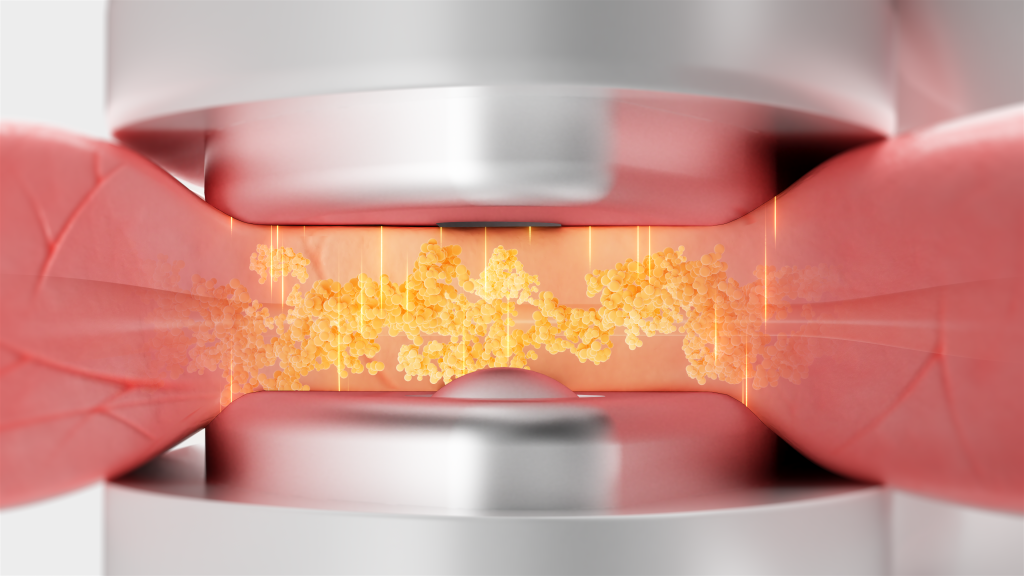
Advanced bipolar vessel sealing combines tissue compression with bipolar electrical energy.
When tissue is compressed between the instrument jaws, electrical current passes through it. Resistance to the current generates heat, producing structural changes in vessel-wall proteins including collagen and elastin. Together with compression of the vessel walls, these changes contribute to tissue fusion and seal formation.
Compression is therefore part of the sealing mechanism rather than simply an instrument-handling feature. Jaw design, compression and energy delivery all contribute to the interaction between the instrument and tissue.
Advanced bipolar systems may also differ in how they monitor tissue and control energy delivery. Their vessel-sealing capabilities should therefore be considered at the device level, according to the specific indications and instructions for use, rather than assumed from the energy modality alone.
For example, the Enerseal Vessel Sealer/Divider is an advanced bipolar instrument with a manufacturer-stated vessel-sealing capability of up to 7 mm.
How Ultrasonic Energy Seals Vessels
Ultrasonic vessel sealing follows a different pathway.
Instead of passing electrical current through the tissue, electrical energy is converted within the instrument into high-frequency mechanical vibration at the active blade.
When tissue is compressed between the blade and opposing jaw, this vibration produces mechanical and thermal effects that alter tissue proteins and contribute to coagulation and seal formation.
Compression, heat and activation time are therefore also relevant to ultrasonic vessel sealing, although the mechanism of energy delivery differs from advanced bipolar technology.
Importantly, vessel-sealing capability is device-specific. It should not be inferred simply from the fact that an instrument uses ultrasonic energy. Different ultrasonic instruments may have different vessel-size indications, energy-control systems, instrument designs and supporting evidence.
Thermal Behaviour During Device Activation
Both advanced bipolar and ultrasonic technologies produce thermal effects during activation.
Thermal behaviour is influenced by more than the energy modality itself. Relevant factors can include:
- activation duration;
- repeated activation;
- tissue engagement and conditions;
- device characteristics; and
- cooling time between activations.
These factors mean that thermal behaviour should not be considered a fixed characteristic of an energy modality alone. It also depends on the specific device and the conditions in which it is used.
Why Vessel Characteristics May Influence Sealing Behaviour
Vessel-sealing capability is often described according to vessel diameter, but diameter does not fully describe the tissue being sealed.
Blood vessels can also differ in wall structure, tissue composition and compressibility. Experimental vessel-sealing studies suggest that these characteristics may influence sealing behaviour.
For example, research examining human blood vessels has investigated relationships between collagen and elastin content and measures of seal strength such as burst pressure. Other experimental studies have examined how vessel characteristics and compression relate to measures such as burst pressure and peel force.
These studies help explain some of the biological and mechanical factors involved in seal formation. However, experimental measurements such as burst pressure and peel force should not be interpreted as establishing clinical thresholds for individual human vessels.
This distinction is important: vessel characteristics can contribute to sealing behaviour, but laboratory findings do not by themselves determine clinical performance.
Instrument Design Influences Tissue Interaction
Energy modality is only one part of vessel sealing. The design of the instrument also determines how tissue is grasped, compressed and exposed to energy.
Jaw geometry, tissue compression and tissue engagement can influence the interaction between the instrument and the vessel. Access and instrument positioning may also be relevant, particularly in minimally invasive procedures where the angle of approach can be constrained.
Instrument design should therefore be considered together with the energy modality.
However, individual design features should not automatically be interpreted as evidence of improved clinical outcomes. A curved jaw, rotation mechanism or other handling feature describes how an instrument is designed; whether that feature produces a clinical benefit requires appropriate evidence.
Why Clinical Evidence Needs to Be Device-Specific
Understanding how an energy modality works does not establish how every device using that modality will perform clinically.
Devices within the same energy category may differ in:
- energy-delivery and feedback systems;
- tissue compression;
- jaw design;
- vessel-size indications;
- activation algorithms; and
- intended use.
Clinical evidence should therefore be interpreted according to the specific device, patient population, procedure, comparator and endpoint studied.
A 2025 multicentre randomized noninferiority trial evaluated SOUND REACH SR7 Shears against HARMONIC ACE+7 Shears with Advanced Hemostasis for sealing target vessels measuring 5–7 mm during thoracoscopic surgery.
The trial enrolled 144 patients across four hospitals in China. The full analysis set included 133 patients: 67 in the SR7 group and 66 in the comparator group.
Successful intraoperative sealing was reported in:
- 67/67 SR7 target vessels: 100%
- 66/66 comparator target vessels: 100%
- Absolute difference: 0%
- 95% confidence interval: −5.5% to 5.4%
The result met the prespecified noninferiority criterion.
The appropriate interpretation is that SR7 was noninferior to the comparator for successful sealing of 5–7 mm target vessels in the thoracoscopic setting studied.
The study does not establish superiority, nor should its results automatically be generalised to vessel sizes, procedures or clinical settings that were not evaluated.
Supporting Different Energy Modalities Within One Platform
Advanced bipolar and ultrasonic technologies use different mechanisms, but some surgical energy platforms are designed to support instruments using both modalities.
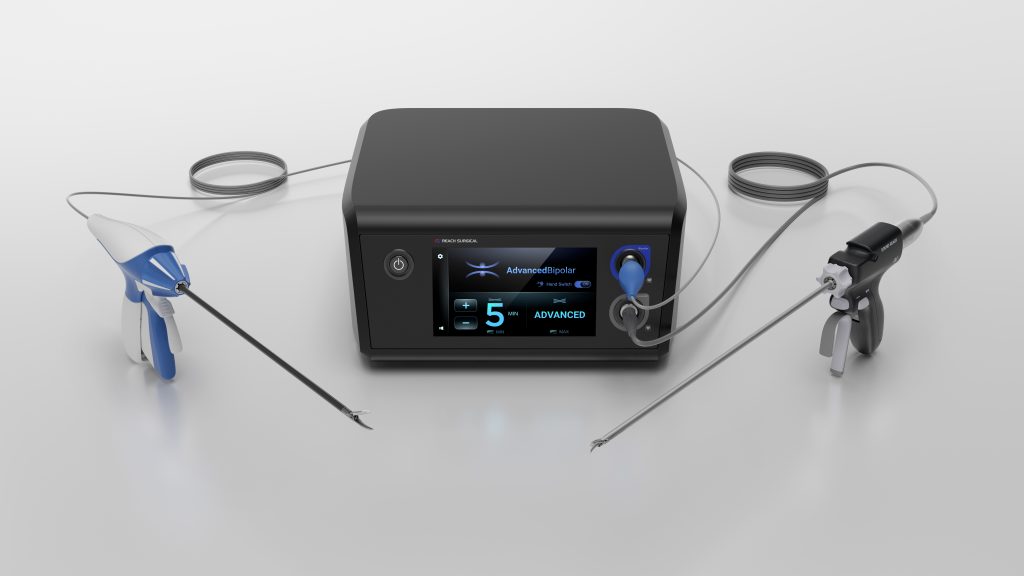
The OP 9 surgical energy platform supports compatible advanced bipolar and ultrasonic instruments from a single generator.
A common platform does not make the two modalities interchangeable. When an advanced bipolar instrument is used, vessel sealing continues to depend on bipolar electrical energy, compression and the characteristics of that instrument. When an ultrasonic instrument is used, tissue interaction continues to depend on mechanical vibration and the design of the ultrasonic instrument.
The relevant considerations therefore remain the same: the surgical task, tissue, required tissue effect, device characteristics and specific indications for use.
Understanding Vessel Sealing in Context
Advanced bipolar and ultrasonic technologies achieve vessel sealing through different mechanisms.
Both combine tissue compression with energy delivery, while activation conditions, vessel characteristics and instrument design can also influence the resulting tissue interaction.
Individual devices may differ in their energy-control systems, vessel-size indications, instrument characteristics and supporting evidence. Clinical findings should therefore be interpreted according to the specific technology, vessels, procedure and conditions studied.
Understanding vessel sealing means considering the technology, the tissue and the clinical context together.
Key Clinical References
- Latimer CA, Nelson M, Moore CM, Martin KE. Effect of collagen and elastin content on the burst pressure of human blood vessel seals formed with a bipolar tissue sealing system. Journal of Surgical Research. 2014;186(1):73–80.
- Li et al. Evaluation of ultrasonic energy for sealing 5–7 mm blood vessels in thoracoscopic surgery: a noninferiority randomized controlled trial. Translational Lung Cancer Research. 2025.
- Society of American Gastrointestinal and Endoscopic Surgeons. Fundamental Use of Surgical Energy (FUSE).
This article is intended for general educational purposes and does not replace individual medical advice, diagnosis or treatment from a qualified healthcare professional.